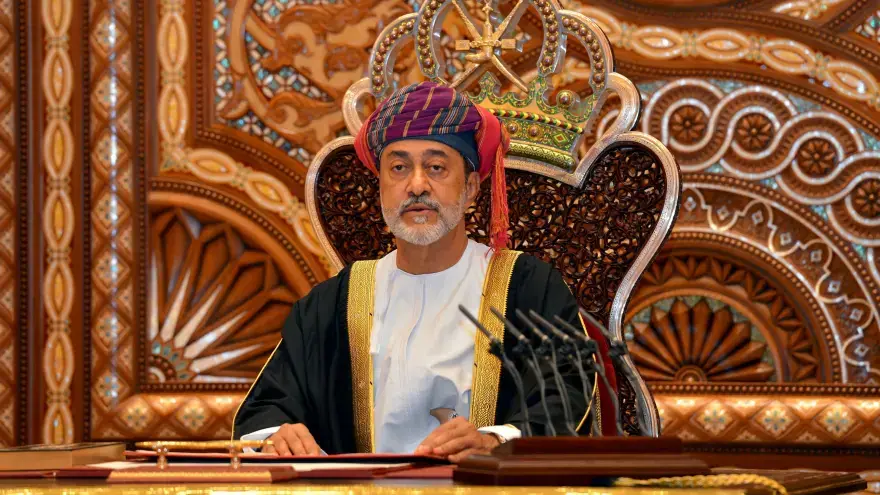
It is customary to evaluate international mediation by its final outcome: the signed agreement, the sustained truce, the closed conflict. By that criterion, Oman's trajectory would seem like a succession of inconclusive attempts. However, that reading confuses the product with the process. What the Sultanate has sustained for more than a decade in the Middle East and North Africa (MENA) region is not a series of isolated mediations, but continued mediation: a permanent communication infrastructure that is activated, suspended, and reactivated according to the pulse of crises, and whose persistence constitutes, in itself, a political fact of the first order.
This column reconstructs five milestones between 2013 and 2026, covering the Iranian nuclear file, the link with Israel, and maritime security in the Red Sea, and subjects them to two transversal lines of analysis.
Axes of Continuity
The first line of analysis concerns discretion as political capital. Omani opacity is not a technical limitation, but the condition of possibility for its effectiveness: by not capitalizing on its efforts in the media, Muscat reduces the reputational costs that parties face when sitting down with an adversary. Hence the symmetrical trust that few Gulf mediators have replicated with equal consistency. Added to this opacity is the historical neutrality that the country has maintained in the face of wars in its surroundings.
The second line refers to the discrepancy between mediating and coercing. Oman facilitates, hosts, and transmits messages; it does not sanction or guarantee by force. Its greatest achievements coincide with moments when the parties had already decided, for their own reasons, to explore a way out. Its limit appears when one of them opts for the military route. Both axes run through the following chronology.
Chronology of Milestones
The Secret Channel between Washington and Tehran
Given its relevance to current tensions, it is worth recalling March 2013, when US officials traveled confidentially to Muscat to meet with Iranian interlocutors. This inaugurated a bilateral channel, kept private from third parties, which preceded the interim agreement of November 2013 and the Joint Comprehensive Plan of Action (JCPOA) of 2015. The process was guided by Sultan Qaboos bin Said, who for decades cultivated good relations with the United States and with the two regional rivals, Saudi Arabia and Iran.¹ This is the foundational milestone of the model: facilitation without protagonism, in a format where success depended on almost no one knowing it existed.
Netanyahu's Visit to Muscat
In late October 2018, Benjamin Netanyahu traveled to Oman and met with Qaboos. It was the first visit by an Israeli head of government to the Sultanate in more than two decades, despite the absence of formal diplomatic relations. A few days earlier, Palestinian President Mahmoud Abbas had been received in the same capital.² More than an agreement, the episode showed Oman's ability to offer a space for contact with Israel without breaking its bridge with Tehran. Specialized analysis interpreted it, in fact, as a sign of a possible additional channel to Iran.
Truce between the US and Ansar Allah (Houthis)
On May 6, 2025, Foreign Minister Badr Al Busaidi announced that Oman's contacts with Washington and with the authorities in Sana'a had produced a ceasefire, following a US bombing campaign over Yemen.³ The agreement was limited: the Houthis specifically linked it to US navigation and warned that it would be evaluated on the ground.³ Even so, it highlighted the economic dimension of Omani mediation: protecting trade routes whose interruption impacts supply chains and global prices. It is also an example of what Muscat can achieve when the parties already have incentives to stop.
Muscat and Geneva
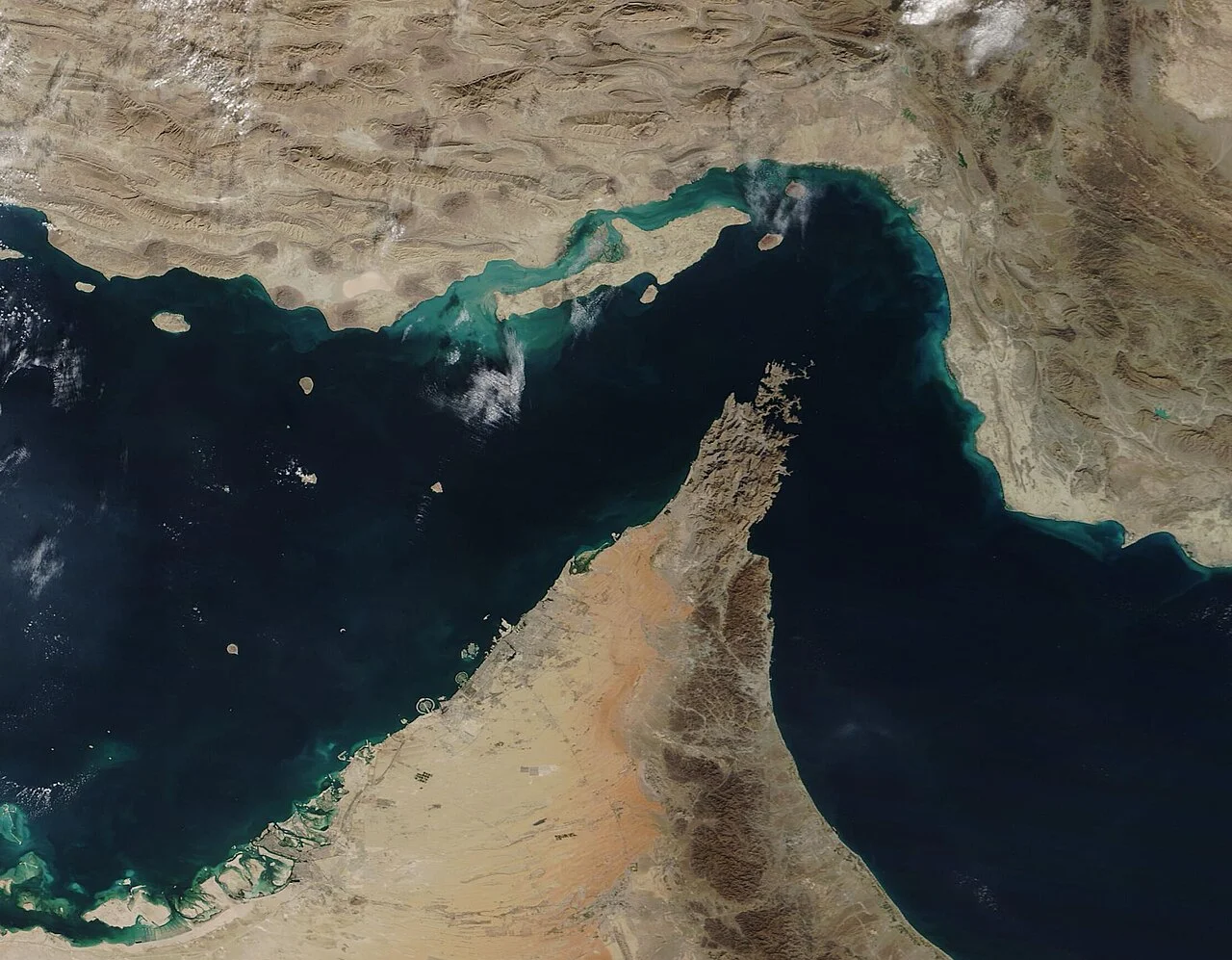
After the collapse of previous talks due to the war of June 2025, Oman resumed indirect mediation between Washington and Tehran. There was a round in Muscat on February 6, 2026, and new rounds in Geneva, the last on February 26, led by the Omani Foreign Minister himself.⁴ The milestone is relevant for its geographical innovation, as Omani mediation moved to Europe without losing its distinctive character, and for the nature of the file: the nuclear dossier, the most sensitive on the regional agenda. Busaidi would later state that an understanding "seemed truly possible".
The Break and the Open Door: 2026
A few hours after the most substantive round, the United States and Israel launched attacks on Iran. In an article published weeks later, Al Busaidi called the offensive illegal and held both countries responsible for having frustrated the peace that was emerging.⁴ This should be read as the official Omani position and not as an accredited fact; other actors offer different interpretations of the solidity of what was negotiated. What is analytically decisive is something else. The Sultanate did not consider the process closed: its foreign minister publicly insisted that the war should not extinguish the hope of a diplomatic settlement.
Continuity without Guarantees
Read together, the five milestones show that Omani mediation operates as an cumulative process and not as an event. Each episode inherits an intangible asset from the previous one, the reputation of reliability, which allows the channel to be reopened after breakdowns. This happened after the collapse of 2025, when Muscat once again hosted talks in February 2026.
In terms of the first axis, discretion functions as capital that is accumulated and spent. It accumulates when the parties verify that their messages are not leaked. It is spent in cases where the visibility of the rounds is inevitable. Such was the case in February of this year, when the Sultanate had to publicly acknowledge conversations that the press had already observed, exposing itself to the scrutiny of neighbors who have historically suspected its equidistance.
The second axis demands a less complacent balance. Omani mediation is effective where there is willingness from the parties and vulnerable where one of them prefers coercion. The 2013 channel and the 2025 truce prospered because Washington, Tehran, and Sana'a had their own reasons for restraint. The February 2026 scenario demonstrates that no mediator, however skilled, can substitute that will. Oman lacks coercive capacity and binding guarantees, and built its legitimacy precisely on that renunciation. The paradox is that the source of its credibility is also its ceiling: it can sustain the bridge, but not force anyone to cross it.
Conclusion: The Bridge is Measured by its Permanence
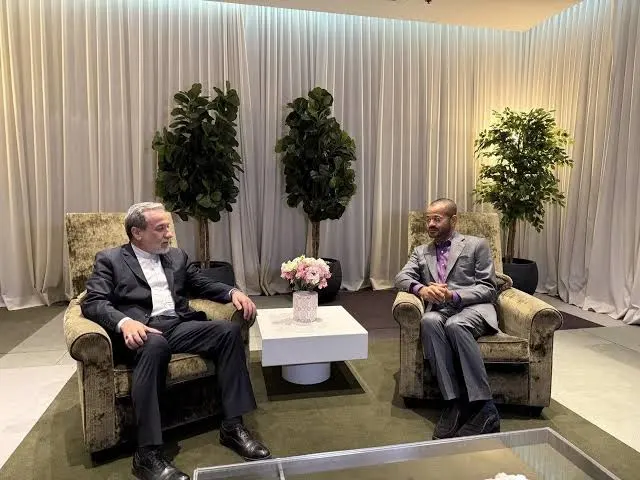
Evaluating Oman by the absence of definitive agreements is equivalent to measuring a bridge by the journeys not undertaken. A more rigorous metric would focus on the preservation of channels: how many times dialogue could be resumed after a breakdown and how long it took to do so. By that criterion, the 2013–2026 chronology reveals remarkable continuity, which holds even in the current state of neither war nor peace, with Qatar assuming a growing role in the exchange of messages between Washington and Tehran.
This distribution of roles suggests that the Gulf mediation architecture is not competitive but complementary: Doha provides dynamism and visibility, and Muscat provides silence and institutional memory.
Therefore, what will be relevant in the coming months will not be whether Oman manages to resolve the conflict or not, something no mediator without coercive power can promise. Rather, the key question lies in who will guard the channel when the powers need it again. All indications are that, once again, it will be the mediator who never withdrew.
¹ PBS NewsHour. (2013, November 25). How a series of secret meetings between U.S. and Iran led to historic agreement. https://www.pbs.org/newshour/politics/how-a-series-of-secret-meetings-between-us-and-iran-led-to-historic-agreement
² Henderson, S., & Orion, A. (2018, October 26). Netanyahu visits Oman (Policy Alert). The Washington Institute for Near East Policy. https://www.washingtoninstitute.org/policy-analysis/netanyahu-visits-oman
³ Al Jazeera. (2025, May 6). Trump says bombing of Yemen to stop as Oman confirms US-Houthi ceasefire. https://www.aljazeera.com/news/2025/5/6/trump-says-bombing-of-yemen-to-stop-as-oman-confirms-us-houthi-ceasefire
⁴ Business Recorder. (2026, March 19). Oman foreign minister slams US war on Iran, blames Israel. https://www.brecorder.com/news/amp/40412387